This week, Microsoft unveiled something that could change the landscape of computing: Majorana 1, a quantum CPU built to solve one of quantum computing’s biggest challenges—stability.
Unlike traditional quantum chips, Majorana 1 is designed to use Majorana fermions—exotic particles that could make qubits more error-resistant and scalable. It’s a bold step, one that moves quantum technology closer to real-world applications.
But there’s something fascinating about this name—Majorana.
Because long before quantum computing was even a concept, there was a physicist whose ideas laid the foundation for this breakthrough. A physicist who, in 1938, vanished without a trace.
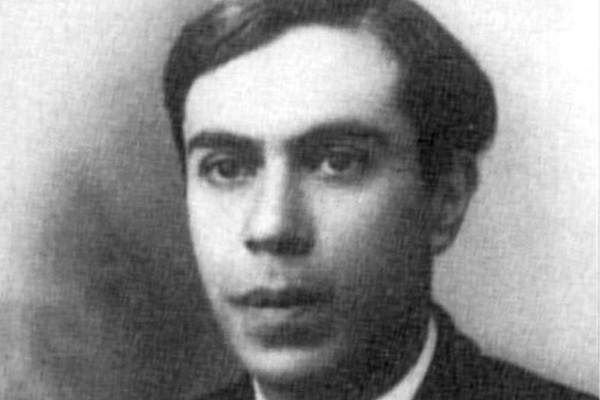
Ettore Majorana: The Scientist Who Disappeared
It’s not often that a scientist becomes a legend. But Ettore Majorana wasn’t just any scientist.
Born in 1906, he was one of the greatest minds of his time. Even Enrico Fermi—his mentor and one of the key figures in nuclear physics—compared him to Newton and Galileo. Majorana had an instinct for physics that seemed almost otherworldly. In 1937, he predicted the existence of particles that are their own antiparticles, now called Majorana fermions. It was a radical idea, one that would take decades to prove. But then, just a year later, Majorana was gone.
In March 1938, a ferry departed from Palermo to Naples. Among the passengers was Ettore Majorana. But when the ship docked, Majorana was nowhere to be found. He had vanished without a trace.
Some say he chose exile. Others believe he was silenced for knowing too much. A few even claim he lived under a new identity, watching the world change from the shadows.
What we do know is that his ideas never disappeared. In fact, almost a century later, Majorana’s theories are shaping the future of modern quantum computing.
From Theory to Reality: The Majorana 1 Quantum Chip
Quantum computers hold enormous potential, but their biggest flaw is instability—qubits are fragile and easily disturbed, making calculations unreliable. Microsoft’s Majorana 1 chip is an attempt to fix this issue at the fundamental level, using Majorana fermions to create topological qubits that are far more stable and resistant to errors.
If successful, this could be the breakthrough that finally makes quantum computing scalable and practical. It’s the kind of shift that could reshape industries, from materials science and cryptography to artificial intelligence.
And at the heart of it all? An idea first written down in 1937.
A Legacy That Refuses to Vanish
Majorana’s ideas were ahead of their time—so much so that only now are we beginning to harness their full potential. His work on exotic particles has gone from theory to reality, shaping the foundation of next-generation computing.
It’s strange to think about. A man who vanished nearly a century ago now has his name etched into one of the most ambitious quantum projects in history.
His story, like his particles, exist in a strange superposition—caught between genius and mystery, waiting for the world to finally catch up.
 Marco's thoughts