-
Powering Up: how EVs are driving the next mobility revolution in Asia

On a recent trip to China, I noticed an interesting trend – the proportion of electric vehicles being significantly higher than most other parts of the world. I understand that the EV penetration in China is as high as 20%. And that is a big number!
This got me thinking about why EVs are getting so popular in South and Southeast Asia; and why companies and governments are investing heavily to build the necessary infrastructure and promote the widespread adoption of EVs.
The EV battery market in the Indo-Pacific region is showing impressive growth potential and the region is fully embracing the electric revolution, driven by increasing environmental awareness, technological advancements, and supportive government policies. My thinking is that one of the main factors driving the EV market in this region is the focus on infrastructure development. With demand being fuelled largely by considerations around cost and a sense of consciousness around environmental factors, this infrastructure focus has emerged as a key push factor.
Governments are taking proactive measures to set up charging stations, battery-swapping networks, and implementing policies to encourage people to adopt EVs. This push for infrastructure aims to overcome the common concerns of limited range and charging options that have held back the widespread acceptance of electric vehicles. Additionally, government initiatives and subsidies are attracting foreign investments, which contribute to the overall growth of the EV industry. For example, Indonesia offers enticing incentives to attract EV battery component producers, EV manufacturers, and EV buyers. The country is strategically leveraging its abundant nickel reserves and implementing targeted measures to attract foreign investment in nickel processing.
Both local and international companies are recognising the immense potential of the EV sector in South and Southeast Asia and making significant investments. Major automakers are entering the market by partnering with local manufacturers and establishing production facilities. The competition within the EV sector is evolving rapidly, with startups emerging and striving to make their mark in this transformative industry. These startups not only compete but also challenge established players in the automobile industry. This competition fosters innovation and drives the development of cutting-edge technologies, making EVs more efficient, affordable, and accessible for consumers.
One use case here that I see is from India, where a company called BluSmart is changing the rules in the ride-hailing industry by using an all-electric taxi fleet. BluSmart aims to attract passengers and drivers by offering a cleaner and more reliable service through direct fleet management. With plans to expand operations and increase its fleet size, this new entrant is capitalising on the growing demand for electric vehicles and the push for sustainability in transportation. Despite facing challenges from larger competitors, BluSmart is gaining market share and reshaping the industry.
Adapting to this trend, large global players such as Uber have also announced plans for all-new green fleets. Uber seems to be basing its growth strategy in the region on having a significant number of electric vehicles (EVs) in its fleet. Uber is emphasising the adoption of environmentally friendly vehicles and has extended partnerships to introduce 25,000 electric cars and 10,000 electric bikes onto its platform in India within the next two years.
Local manufacturing is also in emphasis in South and Southeast Asia. Governments are encouraging the establishment of local manufacturing facilities to reduce dependence on imports and stimulate economic growth. This approach strengthens the domestic industry, creates jobs, and contributes to developing a robust EV ecosystem of production and consumption. During my recent visit to China, a major player in the global EV market, I was thrilled to see that most vehicles on the road were new, and many were electric. China aims to capture 50% of the EV market share by 2035, which seems achievable even before the set deadline of 2030.
The main obstacle hindering the growth of the EV industry is the lack of charging infrastructure and a reliable electricity grid that isn’t dependent on fossil fuels. However, there is significant progress being made on all fronts. Quickly Google “Asia – EV market,” and you’ll find countless articles about the booming industry. The growth projections for the EV market in South and Southeast Asia are highly promising. The EV landscape in this region is undergoing a remarkable transformation. Seeing China’s success in the market was inspiring, and many other countries are on track to achieve a substantial EV market share and embrace a sustainable and electric future.
Now, as we witness the electrification of transportation and the rapid growth of the EV industry in South and Southeast Asia, a question arises: How will this shift to electric vehicles impact mobility in the region? How will it affect the overall sustainability and environment of the area?
-
Cycling and the 5 Es of Leadership

“Life is like riding a bicycle- in order to keep your balance, you must keep moving.”
Albert EinsteinCycling isn’t just a hobby for me. It constitutes a big part of who I am. It is such an innate part of my thinking now that recently, as I reflected on Jack Welch’s five Es of leadership, I started corelating several of the postulates in this treatise on business management with my experiences from cycling.
First documented in his book “Winning”, Welch’s five Es of leadership include Envision, Engage, Empower, Enable, and Execute. The universal nature of these principles apply as much to cycling and sports as they do to the business world.
Competitive cycling is often perceived as an individual activity, but it is way beyond that. Even the strongest champion of the peloton cannot win a stage or a grand tour without a team to support them. The same rule applies to leadership in the business context too. Engaging the team is essential to winning!
To win in cycling, one must have a well-defined approach, aligned to the end goal. In business too, envisioning is the process of defining tactics and strategies to win and communicating them effectively. I always emphasize setting a clear vision for my team. It is important to communicate this vision to the team in a manner that enables success to be achieved through careful planning and foresight.
Even if a team leader works individually at full capacity during a 300 km race with six domestiques, they will not be able to win unless there is a plan to work as an efficient team. If the leader is not focused and energetic, the domestiques will not invest their full power to keep them in the race. Similarly, for a leader in the business environment, it is important to energize and empower the team, helping them build resilience to tackle challenges head-on. Motivating a team to take ownership of their tasks fosters passion, builds trust, and creates a collaborative culture.
If even one or two of the six domestiques that have to keep the team leader in the race to win are not trained properly, the whole team will struggle. By themselves, the other trained domestiques will not be able to keep the leader in the race. Even if the team leader is in great shape, chances of winning get lowered significantly in such an instance. It is the same in business – if the team doesn’t have all the required competencies, the leader cannot win. Enabling the team with proper preparation is key to winning. As a leader, it is crucial to invest in the team’s development and provide them with the right tools, resources, and training to perform their tasks efficiently.
Executing may seem like the last stage of the process. However, without it, all of the first four Es are just a waste of time! Imagine – before a race, the team leader and their domestiques have defined strategy and tactics, learned them well, are highly motivated, and have trained in all earnest. However, on race day, they are more focused on their opponents, spectators, and the race’s glory than execution. Will they win? Similarly, the business leader and their team must remain focused and take calculated risks to overcome obstacles and reach the desired outcome.
Reflecting on all my rides, I realize that leadership, like cycling, requires discipline, determination, and a robust vision that drives the entire journey. Navigating through challenges is an essential part of leadership, and my personal belief is that it’s better to ride through a rugged path that is right for me than to cruise smoothly through one with no meaningful end. As leaders, we must draw parallels between our passions and our approach to leadership. Cycling has taught me about teamwork, strategy, tactics, and execution, and I apply these lessons extensively in my professional workspace.
-
World Economic Forum 2023

While there are wide-ranging drivers of Industry 4.0, a few critical technological pillars will enhance the revolution (and are already starting to). Recently, I have covered my thoughts and readings on this subject as part of my blog. Many of these topics have gained widespread attention among global leaders – I noticed that they were important points of discussion at the recent World Economic Forum in Davos. This indicates how the growth of AI and supercomputers, the multiplying number of devices connecting to the IoT, the large-scale adoption of the cloud by businesses, the evolution of the metaverse, and the matter of cybersecurity are having multilateral implications for the world’s economy and geopolitics, and for industrial sectors.
The metaverse is transforming manufacturing through the use of digital twins, which boost productivity levels and innovation. The World Economic Forum (WEF) has predicted that the most significant impact of the metaverse would be on industries and businesses and not the consumer, owing to the industrial metaverse, which uses digital twinning to enable pathbreaking levels of flexibility, efficiency and productivity.
The emphasis on the importance of AI at the Forum has been interesting to note! Last week, I mentioned briefly how AI is changing the face of robotics and a variety of other sectors. A quick look at WEF’s Artificial Intelligence page will illuminate just how deep the impact is. From education to agriculture and aviation to waste management, AI is setting foot in almost every section of society.
With all this increased connectivity, threats are always around the corner. In my lifetime, cybersecurity has moved from the IT department to the boardrooms of businesses. Earlier this year, the WEF published the report Global Cybersecurity Outlook 2023, predicting the trends in cybersecurity that will impact our society in the year ahead. The report’s landmark prediction suggests that the increased tensions and instability in global geopolitics leave the world with an “exacerbating risk for catastrophic cyberattacks.” Luckily, the report also illustrates the closing gap between business executives and cybersecurity managers.
All in all, I am excited to see the growing prominence of the technological pillars of Industry 4.0 at the Forum. I plan to engage with more of the pillars through my blog in the coming weeks. Stay tuned!
-
The new security consideration in the Industry 4.0 era
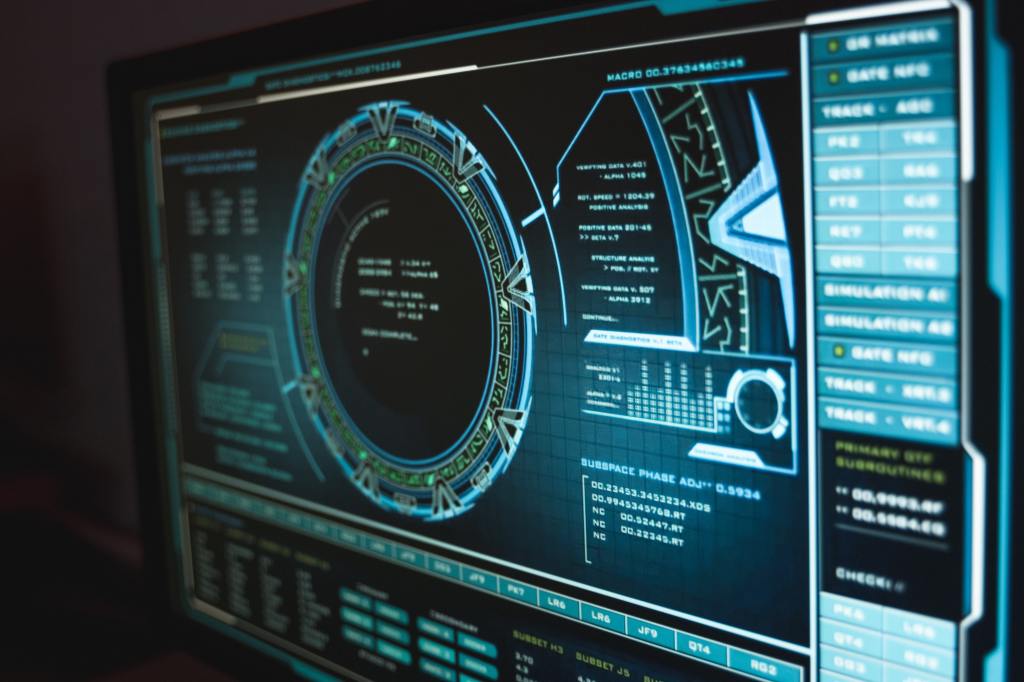
Security is one of the basic principles of human existence and a key driver of societal balance. Several postulates on human needs, including the famed Maslow’s hierarchy psychological concept, rank safety (defined as security of environment, employment, resources, health, property) as a core human requirement. This has been true of the industrial world as well for a long time. Industrial espionage, a practice which has been around for a while now, is testament to the need for protecting enterprise intellectual property and business confidential data.
Industry 4.0 is characterized by the concepts of digital revolution. The emergence of cloud computing as a viable business enabler and transformative ideas such as the metaverse are driving this revolution. But with this global connectivity comes the risk of a new era of industrial espionage – the type that exists in cyberspace. Therefore, for all the good that technological advancements are bringing about, it is critical to address the risk of potential threats posed by cybersecurity concerns.
Cyberspace concepts are not new. They have been around since the 1960s. In its earliest avatar, the main threat to networked computing ecosystems was that of physical sabotage. This was replaced from the next decade onwards by the “creeper-reaper rivalry”. The self-operating and replicating nature of creeper and the detect-eliminate mechanism of reaper foreshadowed modern malware and cybersecurity. As the internet has increasingly become ubiquitous, so has the sophistication and spread of cybercrime. Thankfully, so has cybersecurity.
According to industry estimates, cybercrime will cost the world nearly 10.5 trillion dollars annually by 2025 . In 2022, cyberattacks occurred almost once every 39 seconds. In the age of the business of big data, cybersecurity has moved from IT departments to the boardrooms of most organizations. However, with the high volume of devices connected to the IoT, cybercrime is no longer a matter of information safety only. Anyone with a phone in their hand may be at personal and financial risk.
Cybersecurity is no longer a matter of keeping businesses and data safe. In an age where the human-machine interface grows exceedingly personal, cyber threats are a matter of safeguarding lives. With its expanse, cybercrime has moved beyond the question of ‘will it happen’ to ‘when will it occur’. The detect and eliminate models of cybersecurity need to shift to risk management in this era.
With cybercrime becoming highly sophisticated, we are using advanced techniques, including the use of AI to perform behavioral analysis to understand the patterns and nature of the attackers, as counterpoints. However, at the heart of smart cybersecurity is a smart user – educating people to identify the role they can play in cybersecurity and ensuring that they use all the tools available at their disposal can be a great asset in the fight against cybercrime.
-
The blurring line between real and virtual
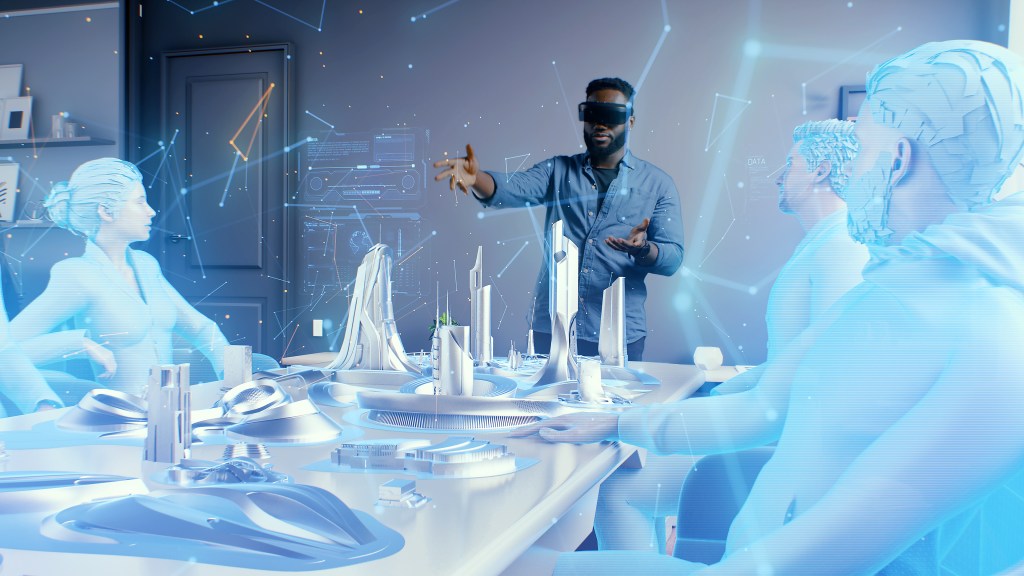
As hyperconnectivity turbocharges our digital interactions today, the question is what next. One of the most significant innovations that the imagination of science has inspired is that of the metaverse. This word has now come to mean a shared virtual environment created by the intersection of a physical reality that is enhanced virtually and a physically-persistent virtual space. However, when the word was coined in the 1992 sci-fi novel ‘Snow Crash’, it roughly described an online world that people explored using digital avatars. Although this idea of an embodied internet has been the talk of the tech town recently, it has been fascinating many of us for a while now.
As a gaming enthusiast, a discussion that I witnessed at the Gartner Symposium about a decade ago has stayed with me all this time. The virtual reality, and aptly named game ‘Second Life’, often referred to as the first metaverse, was examined in the symposium. Released as early as 2003, many pathbreaking elements of the game have helped us conceptualize the metaverse better. The game had no end goal; like social media, it was built around social interactions in a three-dimensional world, which also had its own economy. Similar to a plethora of other innovations, the supporting technologies for gaming and the metaverse have a lot in common, making the gaming industry one of the biggest drivers of this new universe. Developers, such as that of the first-person combat game ‘Unreal’, have successfully built and monetised virtual worlds.
However, gaming alone isn’t driving the evolution of the metaverse. Its implications are multifold in the manufacturing setting. Businesses are saving millions by adopting digital-first models for industrial process monitoring and troubleshooting. Metaverse tech has enabled digital twins – simulated versions of real-world objects that update based on spatio-temporal data. For example, in the automotive industry, simulated crash tests are saving manufacturers both money and time. Similarly, at ABB, we have the RobotStudio, which is open for use through a cloud-based subscription. The RobotStudio suite allows users to build robots in a virtual environment that will accurately replicate the functioning and movement of a physical installation, thus increasing productivity and enabling flexibility in production.
Although the metaverse is creating waves in Silicon Valley, it works wonders in a localised environment. Businesses are providing unique customer experiences using related tech. There is much to do at all levels of the stack before we have a sophisticated globalised virtual universe. But in an age where a social media giant rechristened itself to match the revolution, we know everyone’s focus is on creating this new universe. What else could we do entirely in a virtual environment in the near future?
-
An age where everything talks!

Last week, as I reflected on the increasing trust in the cloud, I also pondered on other drivers that promise a digitized future. Perhaps, one of the most accurate illustrations of the phrase “the future is already here” lies in hyperconnectivity. Unsurprisingly, the prefix ‘smart’ is added to almost every model connected on higher levels – smart production, smart homes, and smart cities, for instance. Today, the value of the network is high since everything is inevitably about talking; person to person, machine to machine, person to machine.
Hyperconnectivity occurs across devices, locations, and media for various purposes. It is expected that by 2025, nearly 27 billion devices will be connected to the IoT. Machines, devices, applications, and sensors now populate the network alongside humans. However, what sets industry 4.0 apart is the pivotal role of the machine and its autonomy. I remember dreaming about my washing machine working with my home’s power grid to find the most optimal time for its cycle; now, this is reality!
Industry 4.0 is equipped with the combined dual powerhouse of mechanization and hyperconnectivity. Never before has more valuable data been collected, exchanged, and analyzed. Plants and assembly lines globally function with machines and facilities connected to a network, creating a single, more efficient virtual plant. Moreover, a hyperconnected product value chain also increases customer trust by involving them at every stage. Businesses can also optimize production, make informed decisions, and detect changes in the value chain using process data.
What are some industrial implications of new levels of connectivity? The energy sector is more sustainable and reliable in detecting power outages and maximizing consumption. Healthcare has moved on to real-time monitoring. The future of the automotive industry lies in vehicles that are increasingly connected to their surroundings. Retail and logistics also are evolving to produce real-time updates to customers.
There is no end to describing how hyperconnectivity is changing the landscape of every industry. However, increased risks also accompany increased reliance on a network for communication. We definitely need to think about some of the threats that we need to mitigate, and about how can businesses facilitate safer connectivity. More about that later…
-
Beyond the clouded judgement

In recent times, providers of cloud-computing environments have been actively going the extra mile to curate and tailor infrastructures, platforms, and software offered as a service to suit the unique needs of businesses. Increasingly, organisations and oft-sceptical CIOs have been making the shift away from on-premise IT solutions.
But what is the cost of this? Besides the perceived ambiguity in procurement models and business objectives, data security and the fear of losing control remain the most prominent reasons for mistrust. Although vendors have been building security and feedback loops in each layer, the key to getting the most out of Infrastructure as a Service (IaaS), Platform as a Service (PaaS), or Software as a Service (SaaS) is prioritising risk management without blind trust.
A vast majority of companies across size and sector types have begun their digital transformation. What is driving this revolution? I recall a major corporation adopting a cloud-first approach as early as 2014 to refocus resources on innovation. More than anything, using the cloud for an organisation beneficially lies in understanding business needs. Manufacturers are jumping on the cloud-wagon for agility, cost benefits, and global expansion.
Many startups with neither the need nor time to develop their own applications are rapidly adopting SaaS. Organisations developing multiple customised applications in short-timelines resort to PaaS to cut time spent in coding and easily access more sophisticated tools. And organisations of all sizes and kinds benefit from IaaS models; with smaller businesses saving on time, resources and human capital, and larger ones being able to retain control of their applications through IaaS solutions.
The cloud enables automated workflows for industries with large assets like plants, equipment, machines, and vehicles. By connecting to the IoT, these assets record massive amounts of data. When paired with industrial cloud computing, the data recorded is efficiently captured on applications which helps streamline asset management and operations. In all, this creates an agile and responsive environment for industrial enterprises driving digital transformation as a key component of their growth agenda today.
Ultimately, it boils down to the three C’s – Control, Convenience and Customisation. Identifying priorities amongst these three ensures that the main task is done. What follows is establishing robust risk-management strategies and finding the vendor that puts the business on cloud nine!
-
Supercomputing and the next industrial revolution

Fact: technology in your smartphone is hundred times more powerful than what NASA used for the Apollo 11 mission in 1969. In just 50 years, human imagination and scientific temper has moved computing to a whole new level. The applications of digital technologies in today are having a distinct impact on almost every moment of our existence and daily routine.
Recent examples:
- Groundbreaking advancements in High Performance Computing (HPC) are being used for weather forecasting, running simulations and assisting in scientific research. A recent announcement introduced the Leonardo HPC system, currently the world’s fourth most powerful supercomputer, which will be able to perform at over 240 petaflops. With one petaflop being the computing speed equal to one quadrillion floating point operations per second, one can only imagine the computing power and limitless applications of a supercomputer this powerful
- Also recently, NVIDIA and Microsoft teamed up to build what they are calling one of the most powerful supercomputers in the world. Its USP – it can be used to research and accelerate advances in generative AI and will be hosted on the Azure cloud. It is also scalable, takes up less power and is super energy efficient
Data, the many petabytes of it that will flow from diverse devices in industrial plants across the world, and the supercomputing to power this data is at the heart of the current industrial revolution. Data capacity and computing speeds are critical to drive in-memory ERPs, Industrial IoT, and integration with smart sensing – all key success factors for the industrial transformation that is in its nascent stages.
A typical industrial set-up has thousands of data generators – tens or even hundreds of thousands in large manufacturing enterprises. All of these churning out valuable data on asset performance every second. Data that can be used to run diverse processes and analytics. Supercomputing will be the bedrock of the ability to capture and store real-time data so analytics can be run on them for predictive insights on optimization. This will help meet the industrial world meet its long-standing dream of coming close to a productivity paradigm.
With frequent breakthroughs in supercomputing technologies, we are racing towards an era of unimaginable innovation. Supercomputing has now started supporting more enterprise use cases, and it’s all driven by AI and Machine Learning.
-
Subscribe
Subscribed
Already have a WordPress.com account? Log in now.
 Marco's thoughts